
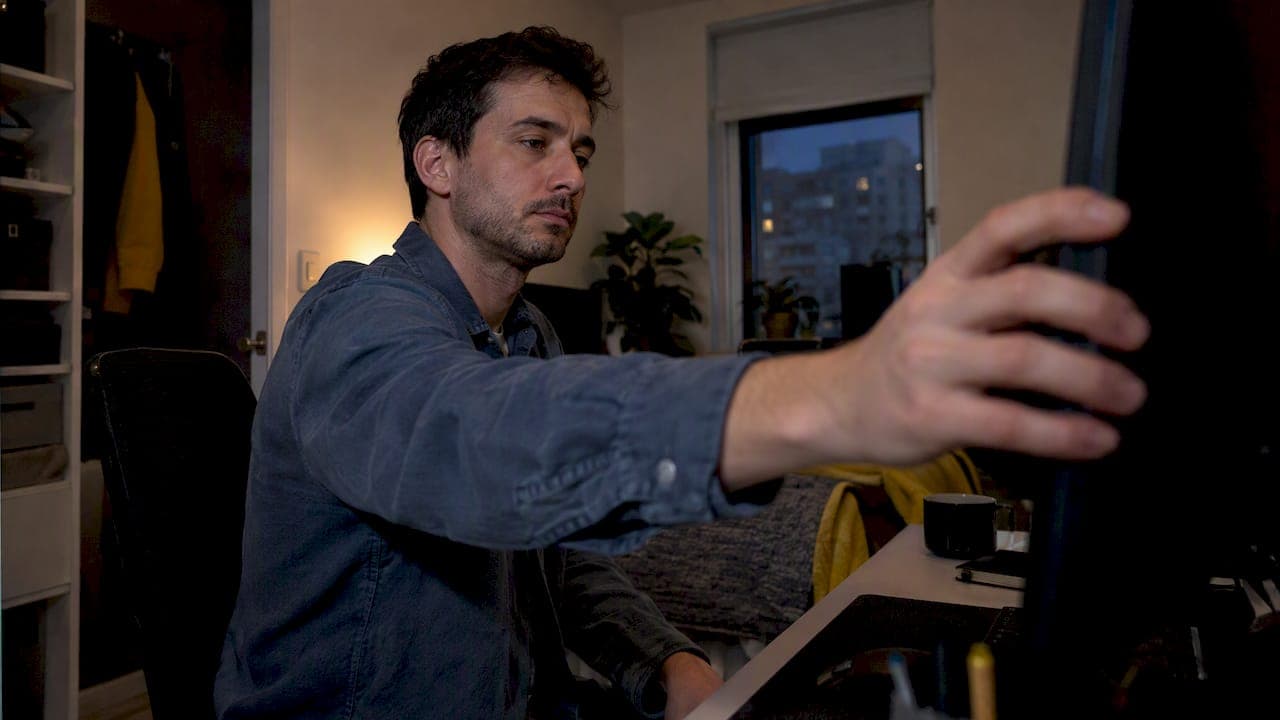
Prop firm burnout is a real occupational syndrome, not a motivation problem, and it requires an immediate pause from live risk if your self-check scores high. The pressure of evaluation deadlines, profit targets, and screen time adds up the same way it does in any high-stakes job. Below, you will find the warning signs, the root causes specific to funded trading, prevention tactics that work while you keep trading, and a short structured reset you can start today.
TL;DR:
- Scores of 4 to 7 call for half size and shorter sessions; scores of 8 or higher require an immediate stop to live trading.
- Tilt after a loss calls for stopping that day; weeks of exhaustion suggest burnout, while poor results despite following rules call for a strategy review.
- After a high score, avoid live trading for seven days, then return at half size only if your score falls to normal or caution.
- Cut caffeine after early afternoon and limit alcohol, because both can impair sleep, which weakens news processing and raises avoidable trading mistakes.
Table of Contents
- What Prop Firm Burnout Actually Is
- Warning Signs and a Burnout Self-Check for Prop Traders
- Why Prop Trading Burns People Out Faster
- Burnout vs. Tilt vs. a Strategy That Doesn't Fit
- Prevention: Habits That Protect Your Trading Mind
- A 7-Day Reset Protocol for Burned-Out Traders
- The Research Behind Trading Fatigue
- What I've Learned Watching Funded Traders Burn Out and Recover
- Evaluation Rules That Don't Add to Your Stress
- FAQ
- Sources
What Prop Firm Burnout Actually Is
The World Health Organization classifies burnout as an occupational phenomenon in the ICD-11, built on three dimensions: feelings of energy depletion, increased mental distance or cynicism toward one's job, and reduced professional effectiveness. For a funded trader, those three dimensions have specific, recognizable shapes.
- Exhaustion shows up as dreading the market open even when your setup is ready, or feeling physically drained after a session with no trades taken.
- Mental distance looks like scrolling past your own trading plan, skipping your checklist, or feeling detached from a strategy you built and once trusted.
- Reduced efficacy means hesitating on entries you would normally take without thinking, or making the same sizing mistake three days running.
Evaluation-driven trading makes this especially fast to develop. A profit target with a fixed drawdown ceiling turns every session into a pass or fail event, and that structure keeps your decision-making system under chronic load in a way that discretionary, no-deadline trading does not. A trader who feels fine on day one of an evaluation can be hypervigilant by day ten, checking equity curves between trades instead of watching price. Understanding how profit targets and drawdown rules interact helps explain why the structure itself, not just the trading, can wear you down.
Warning Signs and a Burnout Self-Check for Prop Traders
Burnout rarely announces itself. It accumulates through small signals that are easy to rationalize individually. Score yourself honestly against the list below, one point for each item that applies to you most days over the last two weeks.
- You feel tired before the market even opens.
- You dread checking your account, even when you are not losing.
- You have stopped following your written entry or exit rules.
- You increase size after a loss to "make it back" faster.
- You trade outside your plan's hours out of restlessness.
- You feel cynical about your strategy or the firm's rules.
- Sleep has dropped below six hours for several nights running.
- You rely on caffeine late in the day to stay sharp.
- You snap at people around you after a losing session.
- You second-guess every setup, even ones that match your rules exactly.
- You feel numb or indifferent after a big win or loss.
- Your win rate or adherence to plan has dropped noticeably in the last two weeks.
A score of 0 to 3 is normal friction: monitor yourself weekly and keep your existing routine. A score of 4 to 7 is a caution zone: cut your position size in half, shorten your sessions, and revisit the self-check in three days. A score of 8 or higher is a high-risk signal: stop taking live risk immediately and move into the recovery protocol below before you touch a live or evaluation account again.
Internal technology problems are commonly named by surveyed traders as a leading source of burnout, according to industry reporting on trader burnout, which means your self-check should include a question about how often platform issues interrupt your sessions. Write your score down somewhere you will actually see it again, not just in your head. If your score stays in the high-risk band for more than one check-in, or if you notice symptoms affecting your life outside trading, that is a signal to talk to a professional rather than try to self-manage through it.

Why Prop Trading Burns People Out Faster
Funded trading compresses several known stressors into a short timeline, and some of them you can change while others are simply part of the format.
- Profit targets and drawdown limits create constant, compounding pressure on every decision, because a single bad stretch can end the evaluation.
- Platform and data problems add a layer of operational anxiety on top of market risk.
- Overtrading after a loss, often called revenge trading, extends losing streaks and erodes confidence further.
- Poor sleep and inconsistent caffeine or alcohol use quietly degrade the judgment you need most during volatile sessions.
Research on work stress among financial traders found that profit goals and long working hours were the top reported stressors, and that higher-performing proprietary traders reported less stress, likely because they had more latitude to trade in a style that matched their own cognitive strengths. That finding matters for evaluation design: rigid, one-size-fits-all rules tend to load more stress onto traders who have to force their style into someone else's box. Separately, many surveyed traders cited internal tech issues as a top burnout driver, according to the same Bloomberg reporting on trader burnout, which puts platform reliability on par with personal habits as a cause worth taking seriously.
Firm rules, like time limits or consistency requirements, are structural: you cannot change them mid-evaluation, only choose a firm whose rules fit how you trade. Sleep, screen time, and substance cycles are modifiable: you can act on them tonight.
Burnout vs. Tilt vs. a Strategy That Doesn't Fit
These three problems feel similar from the inside but need different fixes, and treating one as if it were another usually makes things worse.
- Tilt develops over hours to a few days, triggered by a specific loss or string of losses, and shows up as impulsive, emotion-driven trades that break your own rules.
- Burnout builds over weeks to months, is not tied to one bad session, and shows up as the exhaustion, cynicism, and reduced effectiveness described earlier.
- Strategy or risk mismatch is persistent: your expectancy stays negative or flat across a large enough sample, regardless of how you feel that day.
The remedy has to match the diagnosis. Tilt calls for a hard stop, walking away from the screen for the rest of the day, no exceptions. Burnout calls for the structured rest and gradual return covered in the next sections, not just a day off. A strategy mismatch calls for a backtest and honest risk math, not more willpower or more screen time.
To decide which one you are facing, ask yourself three questions: did this start today or has it been building for weeks, is my process sound on paper but I am not following it, or is my process itself producing poor results even when I follow it exactly? Your answer points to the right fix, and guides like the four-step decision to reset or walk away can help you work through that choice methodically rather than emotionally.
Prevention: Habits That Protect Your Trading Mind
Prevention works best when it is built into your routine rather than treated as an emergency measure you reach for only after a bad week.
Structure your screen time around focus cycles rather than open-ended monitoring. A 90-minute block with a short break afterward tends to protect decision quality better than staring at charts for four hours straight, and capping total screen time keeps fatigue from building across the week.
Risk rules do double duty: they protect your account and your psychology at the same time. Capping risk per trade and limiting your number of trades per day removes a lot of the decision load that leads to overtrading. Guidance on 0.5% to 1% per-trade risk limits walks through the math for sizing trades so that a losing streak never feels catastrophic, which lowers the emotional charge of every single trade.
- Run a pre-market checklist covering platform connectivity, data feed status, and backup internet before the session starts.
- Set a hard daily loss limit that forces you to stop, separate from your firm's drawdown rule.
- Keep a short trading journal that logs not just entries and exits but your energy level and sleep the night before.
- Use an accountability partner or community to report your self-check score weekly, since isolation makes it easier to ignore warning signs.
Sleep deserves specific attention because it is the habit most traders sacrifice first and recover from slowest. A PLOS ONE study of financial traders found that alcohol and caffeine impair sleep in different ways: alcohol degrades how restorative sleep feels even when total hours look normal, while caffeine cuts into total sleep time, and the two combined show a measurable interaction effect. Practically, that means cutting caffeine after early afternoon and treating alcohol as something that disrupts tomorrow's trading, not just tonight's sleep. Regular movement, even a short walk between sessions, helps reset attention in a way that scrolling a news feed does not.
Pro Tip: If you trade a rules-based system, consider letting an expert advisor handle execution during your highest-fatigue hours so a tired decision never overrides a tested plan.
Automation is not about removing yourself from trading entirely. It is about not asking a fatigued brain to make split-second calls that a tested system can make consistently. Tools that score your setups against a defined process, such as the behavioral decision-support tools at EIAlgos, can also act as an external check when you are not sure if a trade matches your plan or is being driven by frustration.
A 7-Day Reset Protocol for Burned-Out Traders
If your self-check score landed in the high-risk band, step away from live risk entirely for the length of this protocol before returning to any funded or evaluation account.
- Day 1: Stop all live trading. Sleep as much as your body wants and avoid checking your account more than once.
- Day 2: Keep trading apps closed. Go for a walk, eat on a regular schedule, and resist the urge to review past trades yet.
- Day 3: Begin light, non-live review. Read back through your last month of journal entries looking for patterns, not individual trades.
- Day 4: Do a slow backtest of your core strategy on historical data, with no money or live pressure attached.
- Day 5: Start paper trading in a demo environment, one or two trades only, purely to rebuild the habit of following your checklist.
- Day 6: Continue paper trading with normal position sizing rules applied, treating it exactly like a live session.
- Day 7: Re-score your self-check. If you are back in the normal or caution band, plan a return to live trading at half your usual size for your first week back.
Pro Tip: Treat your first week back like a new evaluation: smaller size, shorter sessions, and a checklist you actually follow, not the account you left behind.
If your score is still in the high-risk band on day 7, extend the break rather than forcing a return, and consider talking to a mental health professional, especially if exhaustion or cynicism is spilling into life outside trading. The guide on resetting or walking away from an evaluation covers how to decide between extending a break and restarting a challenge cleanly.
The Research Behind Trading Fatigue
The case for taking burnout seriously is not just anecdotal. A handful of findings explain why fatigue hits trading performance specifically.
That is the core finding behind NBER research on sleep and trading performance, which links poor sleep to weaker news processing and a higher likelihood of predictable, avoidable trading mistakes. Decision fatigue works the same way outside of sleep: every choice you make, including small ones like whether to check your phone between trades, draws from the same limited pool of mental energy, so long unstructured sessions leave less in reserve for the decisions that matter.
Over half of surveyed traders named tech problems as their top burnout trigger, per the same Bloomberg survey data, which reframes burnout as partly an operational issue rather than purely a willpower or mindset problem. Combined with the PLOS ONE findings on alcohol and caffeine degrading sleep quality and quantity, the picture that emerges is consistent: trading fatigue has identifiable, addressable mechanical causes, not just an emotional one.
What I've Learned Watching Funded Traders Burn Out and Recover
Working closely with funded traders tends to teach you the same lesson repeatedly: burnout almost never looks like one bad week. It looks like a trader who stopped checking their own checklist three weeks ago and did not notice until the account was gone. Structural pressure matters as much as personality. Rigid time limits and tight consistency rules push even disciplined traders toward overtrading, which is why rules that remove artificial deadlines tend to produce calmer decision-making rather than looser ones.
Accounts without a time limit on any phase let traders slow down when they are tired instead of forcing a trade to beat a clock, and static drawdown rules mean a bad morning does not quietly tighten the room you have left to recover. Letting expert advisors handle execution also takes some of the moment-to-moment decision load off a fatigued trader. For more on how funded accounts change the psychological game compared to a personal account, the piece on trading psychology for funded traders is worth a closer read.
— Jean
Evaluation Rules That Don't Add to Your Stress

Some of the pressure traders describe in burnout self-checks traces directly back to evaluation structure: hard deadlines, strict consistency rules, and fees paid upfront regardless of outcome. We built our evaluations around removing several of those specific pressure points rather than adding more rules on top of them.
- Pay After Pass lets you start an evaluation for $9.99 and only pay the remaining base fee once you actually pass, so a slow, careful approach does not cost you more upfront.
- No time limit on any phase means a tired week does not force a rushed trade just to beat a clock.
- Static, balance-based drawdown keeps your risk ceiling predictable instead of shifting against you after a rough stretch.
- EAs and algorithmic trading allowed means you can offload rules-based execution during your highest-fatigue hours.
- Reward splits up to the maximum offered with the add-on give you a clear incentive structure without extra behavioral strings attached.
| Feature | What it addresses |
|---|---|
| Pay After Pass ($9.99 entry) | Upfront cost pressure during evaluation |
| No time limit on any phase | Rushed, deadline-driven decisions |
| Static drawdown | Unpredictable risk ceiling after losses |
| EAs and algorithmic trading allowed | Decision fatigue during execution |
If you want to practice your reset plan before risking a fee, our free Free1K simulated trial account needs no card and no deposit. When you are ready to evaluate seriously, our package comparison page lays out every account size and rule set side by side so you can pick conditions that fit how you actually trade, not just what is available.
This article is general information, not a substitute for advice from a qualified doctor. Consult a qualified healthcare professional about your own circumstances before acting on anything here.
FAQ
What Is the 42% Rule for Burnout?
If you have seen this figure referenced, treat it as informal content rather than a diagnostic standard, and rely on a structured self-check like the one in this article instead.
What Percentage of Prop Firm Traders Fail Their Evaluation?
Prop firm pass rates vary significantly by firm, account size, and rule structure, and no single figure applies across the industry. Rather than relying on a general statistic, review the specific rules of the evaluation you are considering, since drawdown limits and time pressure affect your odds more than any average would suggest.
Is It True That Almost All Retail Traders Lose Money?
Retail trading carries high failure rates, and this is widely discussed across trading literature, but exact figures vary by study, market, and time period, so no single number holds universally. What matters more for burnout prevention is managing risk per trade and avoiding the overtrading patterns that accelerate losses during fatigue.
What Are the Stages of Burnout?
Burnout is generally described as developing gradually, moving from early enthusiasm and overcommitment through growing stress, chronic symptoms like exhaustion and cynicism, and eventually a crisis point if left unaddressed. The exact number of stages varies by framework, but the practical takeaway is the same: catching it early, using a tool like the self-check in this article, is far easier than recovering from a full crisis point.
How Long Should I Stop Trading If I'm Burned Out?
A short structured break of about seven days, like the reset protocol outlined above, is a reasonable starting point for moderate burnout. If your self-check score stays high after a week, extend the break and consider speaking with a mental health professional rather than returning to live risk.
Sources
- Burn-out an "occupational phenomenon" — WHO
- Sleep, alcohol, and caffeine in financial traders — PLOS ONE
- Work stress and performance among financial traders — ResearchGate
- Tech issues top cause of burnout for US stock traders, study finds — Bloomberg
- Sleep and trading performance — NBER working paper